Location : Apollo Bunder, Colaba, Mumbai
Built By : British Government in India
Construction Started : 1911 | Completed in 1924
Entry Fee : Free
Visiting Timings : Open 24x7
Best Time to Visit : November to February
Famous For : Historic welcome point, photo spot, ferry gateway to Elephanta Caves
History of Gateway of India
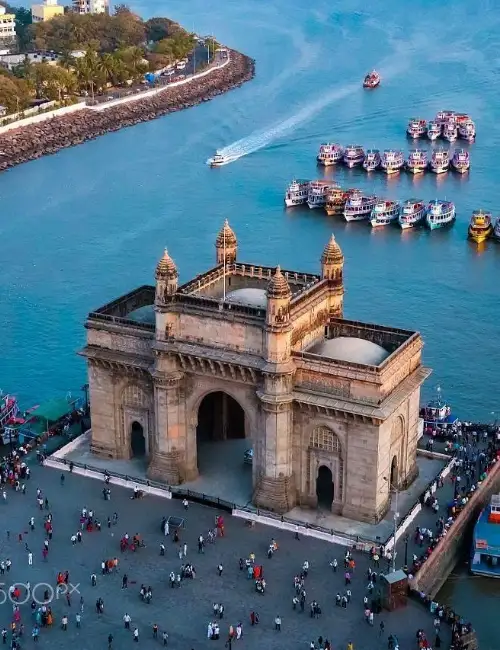
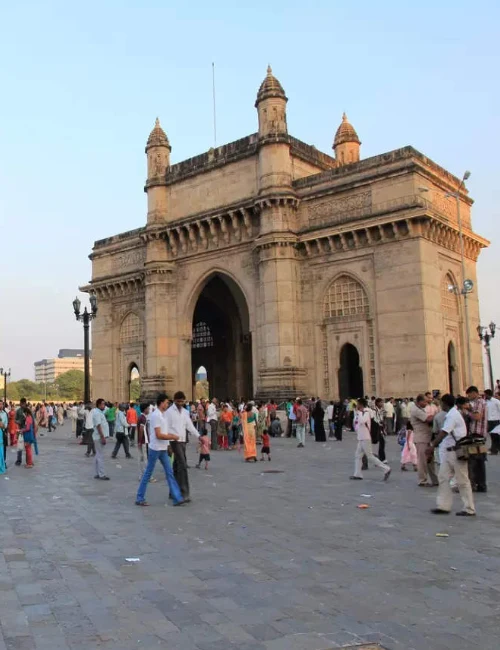
- Designed by Scottish architect George Wittet.
- It was used as a entrance to India for British governors and other important figures.
- Architecturally, it fuses Hindu and Muslim motifs – with a central dome, arches, and detailed latticework.
- After independence, the British troops made their final exit through this very gate, marking its symbolic importance.
Interesting Facts & Myths
- Did you know?- The last British battalion leave India in 1948. It was the first major event to take place at this monument.
- Local legend says the arch is a “gate to opportunity” for those starting a journey via the sea.
- It’s the starting point for ferry rides to Elephanta Caves and Alibaug.
How to Reach?
- By Train: Churchgate or CST (Chhatrapati Shivaji Terminus) – 2 km
- By Cab/Auto: Well-connected via Uber, Ola, and local taxis
- By Bus: BEST buses run frequently from all parts of Mumbai
- By Ferry: Boats to/from Elephanta, Alibaug, and Mandwa operate here
Best Time to Visit
- November – February (Winter): Ideal weather for sightseeing
- March – May (Summer): Humid, visit during mornings/evenings
- June – September (Monsoon): Gateway looks beautiful but ferries may not operate
Tip: Sunset views are a must-see!
Travel Tips
- Avoid touts who offering unlicensed tours.
- The sunrise or sunset is Ideal for best photography.
- Ferry timings to Elephanta are 9:00 AM – 2:00 PM.
- For best experience visit early morning or late evening.
- You must taste the local kulfi and bhel puri stalls nearby.