Location : Mehrauli, Delhi, India
Built By : Qutb-ud-din Aibak (Started), Completed by Iltutmish & Firoz Shah Tughlaq
Year : 1199 AD – 1368 AD
Height : 72.5 meters (237.8 feet)
Timings : 7:00 AM – 9:00 PM
Entry Fee: : ₹30 (Indians), ₹500 (Foreigners) | Free for children below 15
Best Time to Visit : October to March
Famous For : UNESCO World Heritage Site, Indo-Islamic Architecture
History of Qutub Minar
- The construction of Qutub Minar began in 1199 AD by the Mughal Emperor Qutb-ud-din Aibak.
- Later construction was completed by Sultan Iltutmish and renovated by Firoz Shah Tughlaq.
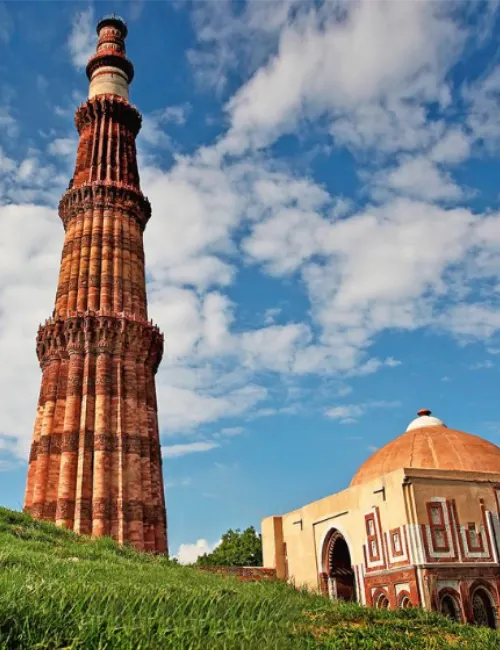
- The red sandstone tower features intricate Quranic inscriptions and floral motifs.
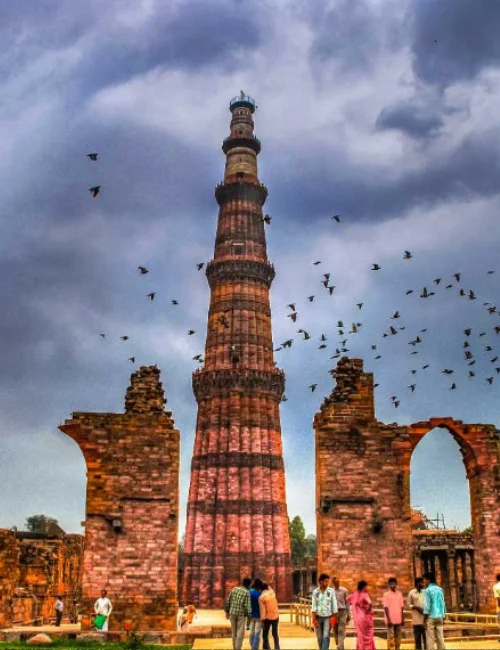
- It has five stories. Each marked by a projecting balcony with distinct architectural designs.
- The Quwwat-ul-Islam Mosque – first mosque in India is located near it.

Interesting Facts & Myths
- Did you know?- The Qutub Minar was inspired by Afghanistan’s Minaret of Jam.
- It has survived several earthquakes and was renovated multiple times.
- There’s a 7-meter tall Iron Pillar which is also known as “Loh Stambh” in the complex does not rust even after 1,600 years!
- The topmost story was originally built of white marble, later replaced with sandstone.
How to Reach?
- By Metro: Best Option – Qutub Minar just 1 km far away from Metro Station (Yellow Line).
- By Train: The distance between Qutub Minar & New Delhi Railway Station is 15 km.
- By Air: Indira Gandhi International Airport is 15 km far away from here.
- By Road: You can also travel here by taxis, buses & auto-rickshaws.
Best Time to Visit
- Winter (October – March): Best time duration to visit because of pleasant weather for sightseeing.
- Summer (April – June): Days are too hot in this time interval so avoid afternoon visits.
- Monsoon (July – September): Scenic views with green surroundings but humid.
Travel Tips
- Visit early in the morning (7:00 AM) to avoid crowds and best view.
- Carry a hat & sunscreen – Delhi’s afternoons can be hot several times.
- Hire a local guide to understand the historical significance.
- Do not climb the minaret – The stairs are so narrow so it has been closed for safety reasons.
- Photography is allowed but tripods are forbidden.